Boat Launching in Southern Mozambique | Baleia Azul Estate
Boat Launching in Southern Mozambique
Planning a deep sea fishing holiday in Southern Mozambique? If you’re bringing your own boat, knowing where you can legally and safely launch is an important part of planning your trip.
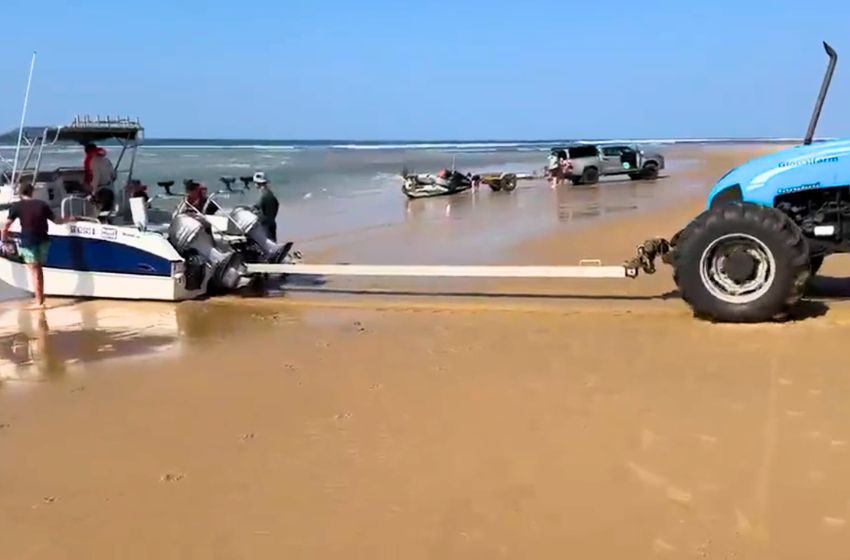
A dedicated tractor is now available at Baleia Azul Estate to assist with the launching and retrieval of boats, making it easier than ever for anglers bringing their own boats to Ponta Mamoli.
Unlike many coastal destinations, much of the coastline between Ponta do Ouro and Santa Maria forms part of a Marine Protected Area (MPA). To help protect this unique coastline, driving on the beach is prohibited, and boats may only be launched from designated launch sites.
For guests staying with GoBundu in Ponta Mamoli, the Baleia Azul Estate launch site provides convenient access to some of Mozambique’s best offshore fishing while offering a safe and efficient launching facility.
Boat Launching at Baleia Azul Estate
Baleia Azul Estate features a dedicated slipway leading directly onto the beach, allowing deep sea fishing boats to be launched and retrieved using a specialised tractor-assisted launch service.
The newly available dedicated tractor makes launching and retrieving boats safer, easier and more convenient for guests bringing their own boats to Mozambique.
Whether you’re heading offshore for a day of fishing or returning after an unforgettable morning on the water, this launch facility provides convenient access to the ocean while helping protect the surrounding coastal environment.
Guests staying with GoBundu who wish to use the launch service should simply let their GoBundu booking agent know before arrival. We’ll put you in direct contact with the launch operator, who will arrange launch and retrieval times with you directly.
As launches are arranged in advance, we recommend contacting us before your holiday so everything is organised before you arrive.
One of Only Four Designated Boat Launch Sites
Between Ponta do Ouro and the Maputo National Park, there are only four designated boat launch sites.
These are:
Ponta do Ouro Bay
Ponta Malongane Campsite
White Pearl Resort
Baleia Azul Estate (Ponta Mamoli)
Because beach driving is prohibited throughout the Marine Protected Area, these designated launch sites provide safe and environmentally responsible access to the ocean.
For guests staying in Ponta Mamoli, Baleia Azul Estate is the closest and most convenient launch site.
Why Anglers Love Fishing in Southern Mozambique
Southern Mozambique has earned an outstanding reputation among anglers from South Africa and beyond.
The warm Indian Ocean waters are home to an incredible variety of game fish throughout the year, making this coastline a favourite destination for deep sea fishing enthusiasts.
Depending on the season and weather conditions, anglers regularly target species including:
Couta (King Mackerel)
Kingfish
Tuna
Dorado (Mahi-Mahi)
Sailfish
Marlin
Launching from Baleia Azul Estate gives fishermen quick access to productive offshore waters while enjoying the peaceful surroundings of Ponta Mamoli.
Stay Close to the Launch Site
GoBundu offers a carefully selected collection of self-catering accommodation in Ponta Mamoli, making it easy to stay close to the Baleia Azul launch site.
Whether you’re travelling with family, friends or your fishing crew, you’ll find spacious holiday homes perfectly suited to your next Mozambique fishing adventure.
Browse our Ponta Mamoli accommodation here:
https://www.gobundu.com/properties?area=ponta-mamoli
More Than Just Fishing
Ponta Mamoli offers far more than excellent offshore fishing.
When you’re not out on the water, you can enjoy quiet beaches, snorkelling, swimming, whale watching during the migration season, or simply relaxing at your holiday home.
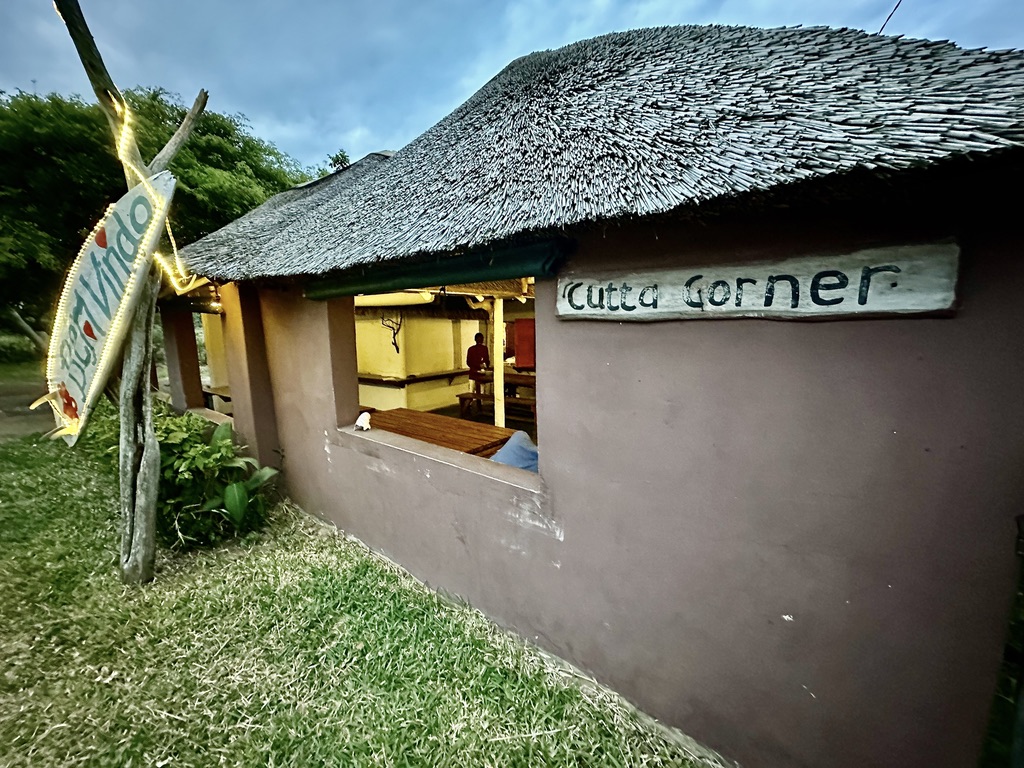
If you’re looking for a meal after a successful day on the ocean, Cutta Corner, Ponta Mamoli’s local restaurant, is well known for serving fresh seafood. The owner regularly heads out on his surf ski to catch fresh fish, meaning the catch of the day often comes straight from the surrounding waters.
Planning Your Fishing Holiday?
If you’re bringing your own deep sea fishing boat to Southern Mozambique, let your GoBundu booking agent know when making your reservation.
We’ll connect you directly with the launch operator so you can arrange your launch before arriving and spend more time enjoying everything Southern Mozambique has to offer.
With a dedicated tractor now available for boat launching and retrieval, Baleia Azul Estate offers one of the most convenient and well-equipped launch sites in Southern Mozambique.
Whether you’re chasing trophy fish, planning a family fishing holiday or simply exploring the spectacular coastline, Baleia Azul Estate provides convenient access to one of Southern Mozambique’s designated boat launch sites.
View our Ponta Mamoli accommodation:
https://www.gobundu.com/properties?area=ponta-mamoli
Frequently Asked Questions
Can anyone use the Baleia Azul Estate boat launch?
Yes. Guests staying with GoBundu can arrange to use the launch facility, regardless of which GoBundu holiday home they are staying in. Simply ask your GoBundu booking agent to put you in touch with the launch operator before your arrival.
Is there a tractor available to launch and retrieve boats?
Yes. A dedicated tractor is now available at Baleia Azul Estate to assist with the safe launching and retrieval of boats. Guests wishing to use the service should arrange this with the launch operator before arriving.
Why can’t I launch my boat anywhere along the beach?
The coastline between Ponta do Ouro and Santa Maria forms part of a Marine Protected Area. To protect this environmentally sensitive coastline, driving on the beach is prohibited, and boats must be launched from designated launch sites.
Where can I stay if I’m bringing my own boat?
GoBundu offers a wide range of Ponta Mamoli accommodation, making it easy to stay close to the Baleia Azul launch site while enjoying a comfortable self-catering holiday.
Browse available holiday homes here:
https://www.gobundu.com/properties?area=ponta-mamoli
Read More